
Over the past few years, the e-commerce landscape has been transformed by the influx of virtual reality (VR) technologies, offering you unprecedented opportunities to enhance your shopping experience. As you navigate this exciting realm, it’s necessary to understand how VR websites can redefine customer engagement, streamline decision-making, and revolutionize product interactions. In this blog post, we will explore the innovative possibilities that VR presents for e-commerce and how you can leverage these advancements to stay ahead in a competitive market.
Reimagining Online Shopping: The VR Advantage
VR technology opens the door to a redefined shopping experience that feels more like visiting a physical store than browsing a website. Imagine walking through a virtual marketplace where you can explore aisles, interact with products, and have real-time conversations with virtual sales associates. This level of engagement transforms how you perceive online shopping, making it not just a transaction but an experiential journey that fosters greater customer satisfaction and loyalty.
Immersion and Engagement: How VR Captivates Shoppers
With VR, you’re not just viewing products; you’re immersed in a compelling shopping environment that keeps you engaged. Consider how a virtual reality platform allows you to try on clothes, visualize furniture in your home, or experience products in a way traditional websites can’t match. This immersion results in longer shopping sessions and a more profound emotional connection with brands, thus increasing the likelihood of purchases.
The Role of Realism: Rendering Products in 3D and Beyond
The integration of 3D rendering into VR shopping experiences brings products to life in an unprecedented manner. When you interact with three-dimensional representations, you gain a better understanding of size, texture, and functionality, enhancing your decision-making process. As a result, the potential for customer misjudgment decreases, leading to higher satisfaction rates post-purchase.
Incorporating advanced 3D rendering techniques not only enhances realism but also provides an interactive element as you manipulate and examine products from every angle. Innovative tools like photogrammetry allow businesses to capture real-world products digitally, ensuring you see authentic representations rather than generic images. This level of detail helps eliminate uncertainty about quality or fit, building trust and encouraging repeat purchases. When you can virtually “handle” items before buying, that confidence translates into a more efficient and enjoyable shopping experience, ultimately increasing conversion rates for e-commerce businesses.
The Future of Personalization in a Virtual Marketplace
As virtual marketplaces evolve, personalization becomes even more paramount to enhance user experience and drive conversions. Featuring customized recommendations, VR environments can adapt to your preferences, ensuring that products align with your tastes and previous interactions. Imagine strolling through a virtual storefront curated just for you, where items consistently revolve around your interests. The role of predictive analytics and user data will be central, creating immersive experiences that truly feel tailored to each individual shopper.
Tailored Experiences: Leveraging AI alongside VR
Integrating AI with VR creates a dynamic duo that tailors your shopping experience in real time. By analyzing your behavior and preferences, AI can adjust virtual environments to highlight products that resonate with you, enabling a more intuitive shopping process. For instance, if you frequently browse eco-friendly products, the VR platform can showcase sustainable brands prominently, providing a curated selection that feels personalized and relevant.
Behavioral Analytics: Understanding Customer Interactions
Behavioral analytics is instrumental in grasping customer interactions within VR spaces. By tracking your movements, choices, and time spent on certain products, businesses can refine their strategies to enhance engagement and ultimately improve sales.
Focusing on specific behavioral patterns allows e-commerce businesses to dive deeper into understanding your preferences, helping them refine their inventory and marketing strategies. For example, if data reveals you linger longer on specific product categories, brands can prioritize those items, create targeted advertisements, or even adjust the layout of virtual spaces to cater to your habits. As a result, an enriched shopping experience is created, fostering loyalty and increasing the likelihood of repeat visits—allowing businesses to cultivate a relationship that goes beyond mere transactions.
Bridging Physical and Digital Worlds: Omnichannel Strategies
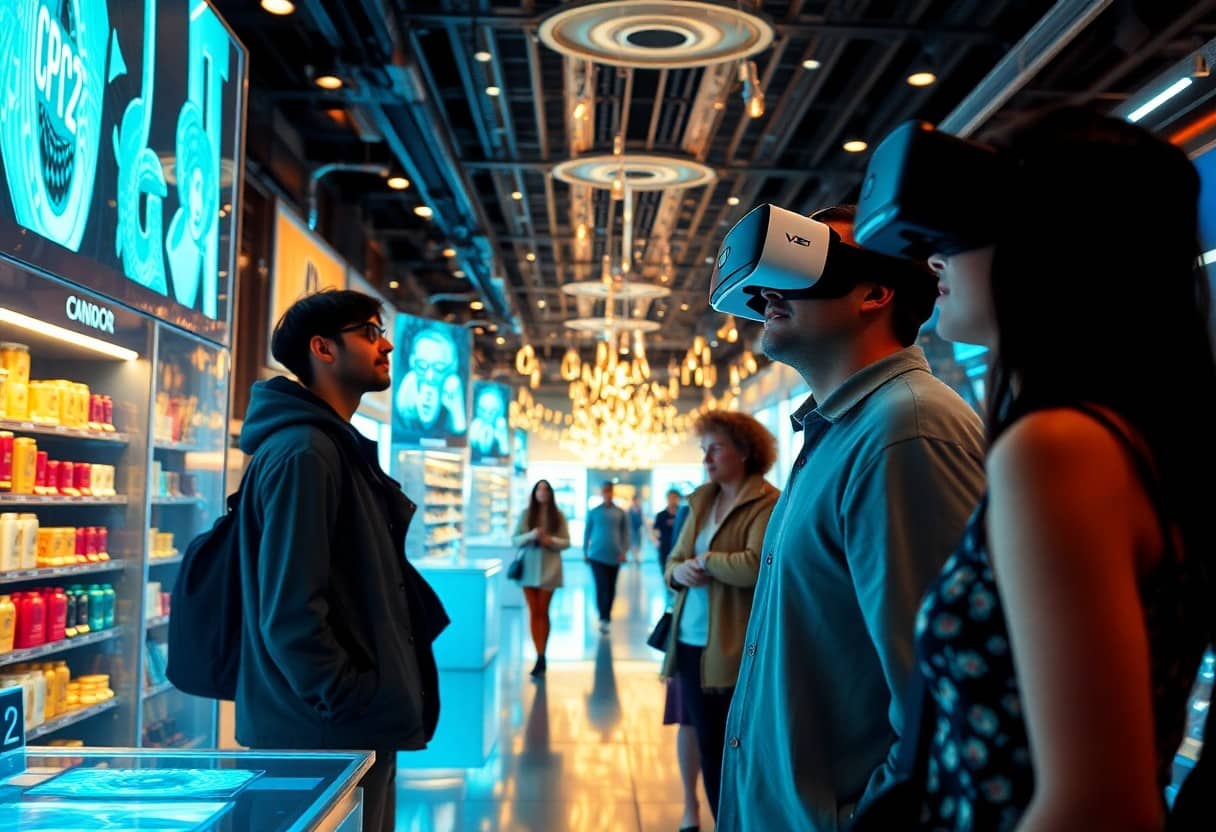
Your shopping experience is set to become more seamless than ever, as brands integrate virtual reality into their omnichannel strategies. By merging the physical and digital realms, you can explore products in a virtual space, while having the option to purchase them in-store or online. This hybrid approach allows for greater engagement and customer satisfaction since you can interact with products in various settings, enhancing your overall shopping journey.
Creating Cohesive Brand Journeys through VR
As brands adopt virtual reality, they can craft cohesive journeys that align both online and offline experiences. You’ll find that engaging VR elements, such as virtual showrooms or interactive product displays, will enhance brand storytelling and create a unified experience, regardless of how you choose to shop. The seamless integration of VR technology ensures that your emotional connection with a brand remains strong whether you’re browsing on a website or visiting a physical location.
The Impact on In-Person Retail Spaces
In-person retail spaces are transforming as traditional displays merge with immersive VR technology. By integrating virtual experiences into the physical environment, retailers can captivate your attention and elevate your shopping experience. Innovative installations allow you to visualize products in unique ways, encouraging you to engage with items more deeply before making a purchase decision. Retailers like IKEA, for instance, are already utilizing augmented reality apps to demonstrate how furniture can fit into your home, making the in-store experience more interactive and informative.
This transformation not only enhances your shopping experience but also offers retailers valuable insights into your preferences and behaviors. By combining in-store visits with virtual experiences, chain stores can track your interactions with both realms, tailoring offers and recommendations that resonate with your interests. As the lines between physical and digital blur, the fusion of VR technology within in-person retail will create a dynamic shopping environment that promotes exploration and curiosity, ultimately driving sales and building stronger connections with you as a customer.
Overcoming Technological Barriers: Adoption and Accessibility
Adopting VR technology in e-commerce presents unique challenges, notably in accessibility and maturity. As advancements unfold, companies are tasked with ensuring their platforms remain user-friendly, ideally without alienating less tech-savvy customers. Streamlining onboarding processes and focusing on intuitive design will pave the way for greater adoption, establishing VR as a viable shopping avenue for a diverse audience.
High Costs vs. Expanding Market: A Tipping Point?
The financial burden of implementing VR solutions can deter many businesses, yet the e-commerce market is ripe for transformation. Recent estimates reveal that VR in e-commerce could surpass $1 billion in the next few years, providing an intriguing incentive for brands willing to invest. The balance between high initial costs and a rapidly growing digital consumer base will play a pivotal role in determining the industry’s trajectory.
User-Friendly Solutions: Simplifying VR Integration for E-commerce
Creating user-friendly VR solutions can significantly lower the barriers to entry for businesses eager to tap into this burgeoning market. Simplifying VR integration into existing e-commerce platforms allows retailers to enhance customer experiences without overwhelming them with complex technology. Platforms like Shopify are already starting to roll out easy-to-implement VR tools, illustrating a growing trend toward accessibility designed to reduce friction during purchase journeys.
Streamlining VR integration for e-commerce requires intuitive interfaces and seamless connections with current technologies. Companies are focusing on drag-and-drop functionalities and simplified frameworks that facilitate smooth VR incorporation into web stores. For instance, some retail brands are leveraging tools that allow customers to visualize products in their own environments, with minimal setup required. This way, businesses can attract a broader audience, spark interest in VR shopping experiences, and ultimately drive sales while ensuring that newcomers find the technology engaging and straightforward.
Ethical Considerations and Consumer Privacy in Virtual Spaces
As VR websites evolve in e-commerce, ethical considerations surrounding consumer privacy gain prominence. You must be vigilant about how data is collected, utilized, and safeguarded within these immersive environments. Concerns about surveillance and data exploitation necessitate transparent policies to ensure users feel secure while interacting. Crafting ethical standards in VR not only builds consumer trust but also sets the stage for a sustainable digital shopping experience. Explore more on The Potential Of Virtual Reality to deepen your understanding of this critical aspect.
Navigating Data Practices in VR Environments
In VR environments, you face intricate data practices that can impact user experiences. Data collection can range from purchase history to behavioral patterns within the virtual space, and understanding these practices is vital. You must ensure that users are informed about what data is being collected, how it will be used, and the steps taken to protect their information from breaches.
Building Trust: Transparency in Customer Interactions
Transparency enhances trust in customer interactions within VR environments. By clearly communicating data practices, you’re more likely to foster a strong relationship with your audience. Scrutiny around data privacy is increasing, and being upfront about your business’s policies will show customers that you value their privacy and choices. This transparency can also differentiate your brand in a competitive market.
Providing easy-to-access information about your data collection methods and privacy policies instills a sense of security among users. For instance, implementing clear visual cues or prompts during VR experiences that highlight data usage helps demystify your practices. Engaging with customers through regular updates on how their data is being protected reinforces a positive perception. Such proactive approaches not only build a loyal customer base but also position your e-commerce brand as a leader in ethical standards within the VR landscape.
To wrap up
From above, it’s evident that the future of VR websites in e-commerce presents a landscape rich with opportunity for you. By integrating immersive experiences into your online store, you can significantly enhance customer engagement and satisfaction. As technology advances, embracing VR can offer you competitive advantages, allowing your brand to stand out in a crowded market. As you explore these enigmatic possibilities, consider how your unique offerings can benefit from the transformative power of virtual reality to provide an unforgettable shopping journey for your customers.
Q: How can VR websites enhance the shopping experience for consumers?
A: VR websites can significantly improve the shopping experience by providing an immersive environment where customers can interact with products in a simulated 3D space. Shoppers can visualize items in their real-world context and examine them from all angles, which can help them make informed decisions. This engagement can also lead to a stronger emotional connection with products, as users can visualize using them before making a purchase, effectively reducing uncertainty and enhancing satisfaction.
Q: Will VR websites be accessible to all shoppers, or is there a risk of excluding certain demographics?
A: While VR technologies are becoming more mainstream, there’s a concern that not all consumers may have access to VR headsets or the necessary technology to engage with VR websites. However, many companies are working to create VR experiences that can also be enjoyed on traditional devices, like smartphones and computers. By offering both VR and standard interfaces, brands can reach a broader audience and ensure that all customers can participate in the interactive shopping experience, regardless of their technological capabilities.
Q: What impact could VR websites have on sales conversion rates for e-commerce businesses?
A: The integration of VR websites into e-commerce has the potential to boost sales conversion rates significantly. Immersive experiences can lead to longer engagement times, encouraging customers to explore more products. Studies suggest that when customers can interact with a product in a virtual environment, they are more likely to feel confident in their purchase decision, thus reducing cart abandonment rates. Additionally, personalized VR experiences can provide tailored product recommendations, further enhancing conversion opportunities and driving sales growth.
